


Ho Chi Minh City, 7 July 2026
The estate is a decisive element in inheritance. It represents the lifetime of hard work and savings of the decedent, and defines the value of the testament for the heir(s).
This article provides an overview of the regulations governing the estate and key aspects of its distribution.
Estate
The estate includes the decedent’s separate property and their share of common property held with others. The estate is managed by an estate manager, by the person currently possessing, using, or managing the estate (if no estate manager is appointed), or by a competent state authority (if the heir(s) have not yet been identified and no estate manager exists).
Estate Left for Worship
A testator may set aside a portion of their estate for worship. This portion cannot be distributed for inheritance and must be handed to a designated custodian or an administrator chosen by the heir(s) to be used solely for worship.
If the estate is insufficient to pay the decedent’s property obligations, the testator cannot set aside any portion of the estate for worship.
Testamentary Donation
A testamentary donation is the designation of a portion of an estate by a testator as a gift to another person or organization, which must be clearly specified in the testament.
The testamentary donee must be alive or exist at the time of opening inheritance. In principle, the donee is not required to perform property obligations of the decedent regarding the donated portion, unless the remaining estate is insufficient to cover those obligations.
Estate Distribution
The rules of distribution differ depending on whether inheritance at law or a testament:
| Distribution under
Inheritance at Law |
Distribution under
Testamentary Inheritance |
| If an heir was conceived but not yet born at the time of distribution, a corresponding portion of the estate must be reserved to protect their future inheritance right.
Distribution is preferred in kind. Where the estate cannot be divided equally in kind, the heirs may reach an agreement on the valuation of the assets and on which heir shall receive such assets. In the absence of such agreement, the assets shall be sold and the value thereof distributed among the heirs. |
The estate is distributed according to the testator’s will. If the testament does not specify the portion for each heir, the estate will be divided equally, unless otherwise agreed.
For estate assets in kind, the heirs shall be entitled to the fruits and profits derived therefrom and shall bear any fluctuations in the value of such assets until distribution. Where a testament provides for the distribution of the estate according to specified percentages or proportions, such percentages or proportions shall be determined based on the actual value of the estate remaining at the time of distribution. |
Key Notes on Estate Distribution
Limitation on Distribution
Distribution may be delayed in accordance with the testator’s will or by agreement among all heirs.
If distribution would seriously affect the livelihood of a surviving spouse and family, the court may temporarily delay distribution for up to three years from the time of opening the inheritance at the request of the surviving spouse. This delay may be extended once for no more than three years.
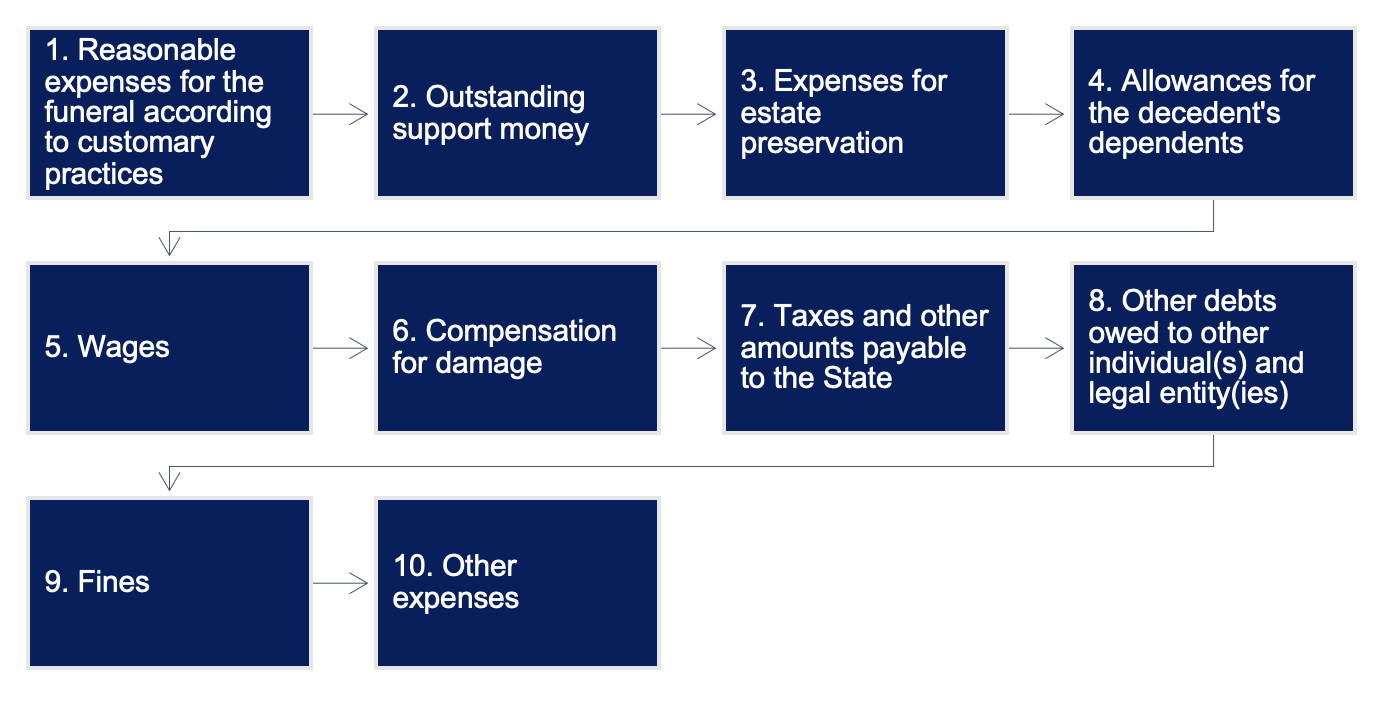
Priority Order of Payment
In consideration of estate distribution, property obligations and expenses related to the inheritance must be paid in the following order of priority:
Epilogue
Making a testament and establishing inheritance rights requires careful compliance with regulations on estate and distribution of estate. Proper understanding and application of these regulations prevent disputes and safeguard the lawful rights and interests of all parties.
—
See the previous parts here: Part 1 | Part 2 | Part 3
—
For advice on inheritance, estate planning and estate distribution in Vietnam, please contact our team:
📧 info@indochinecounsel.com
☎️ (+84) 28 3823 9640