


Ho Chi Minh City, 24 April 2026
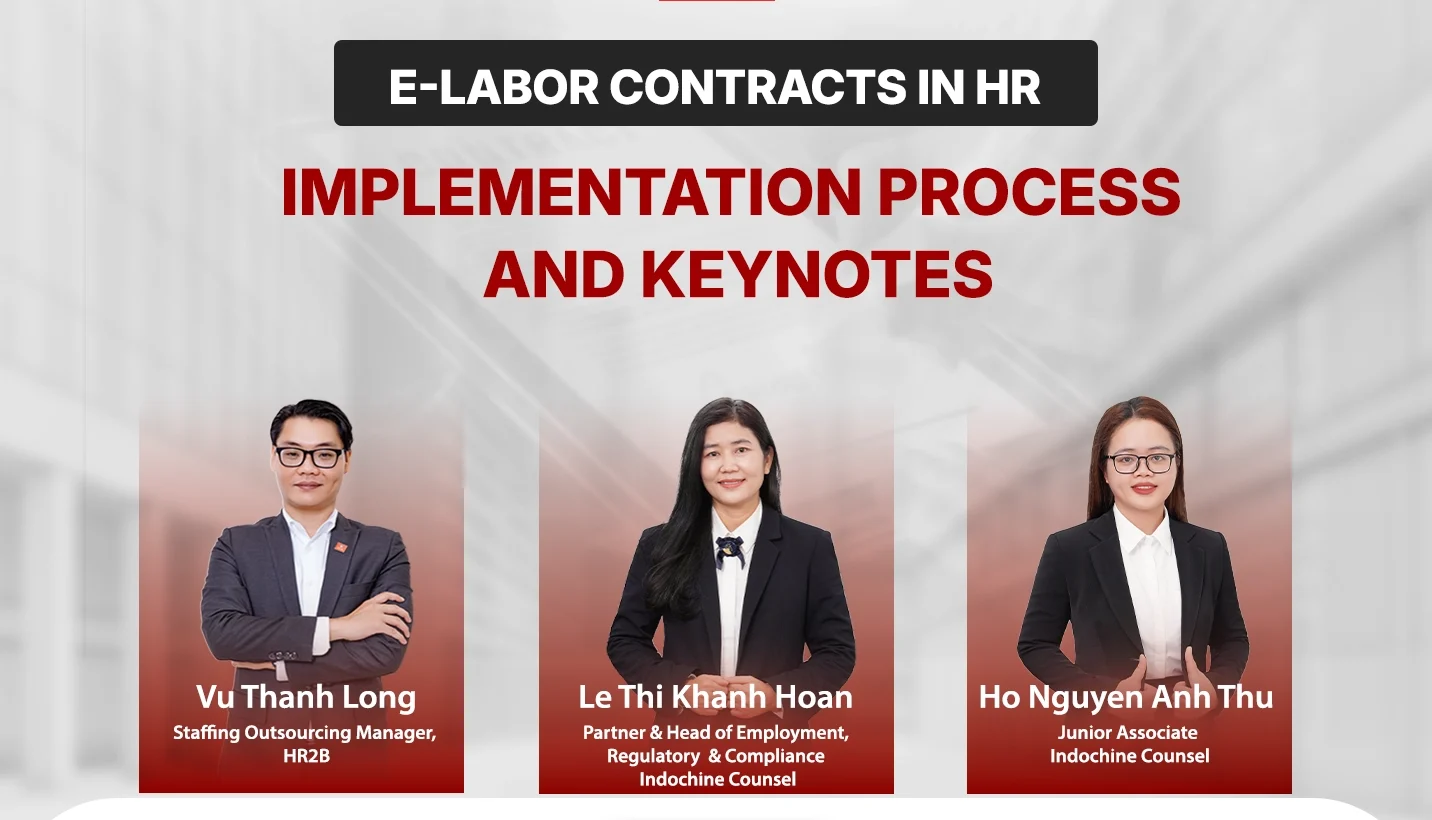
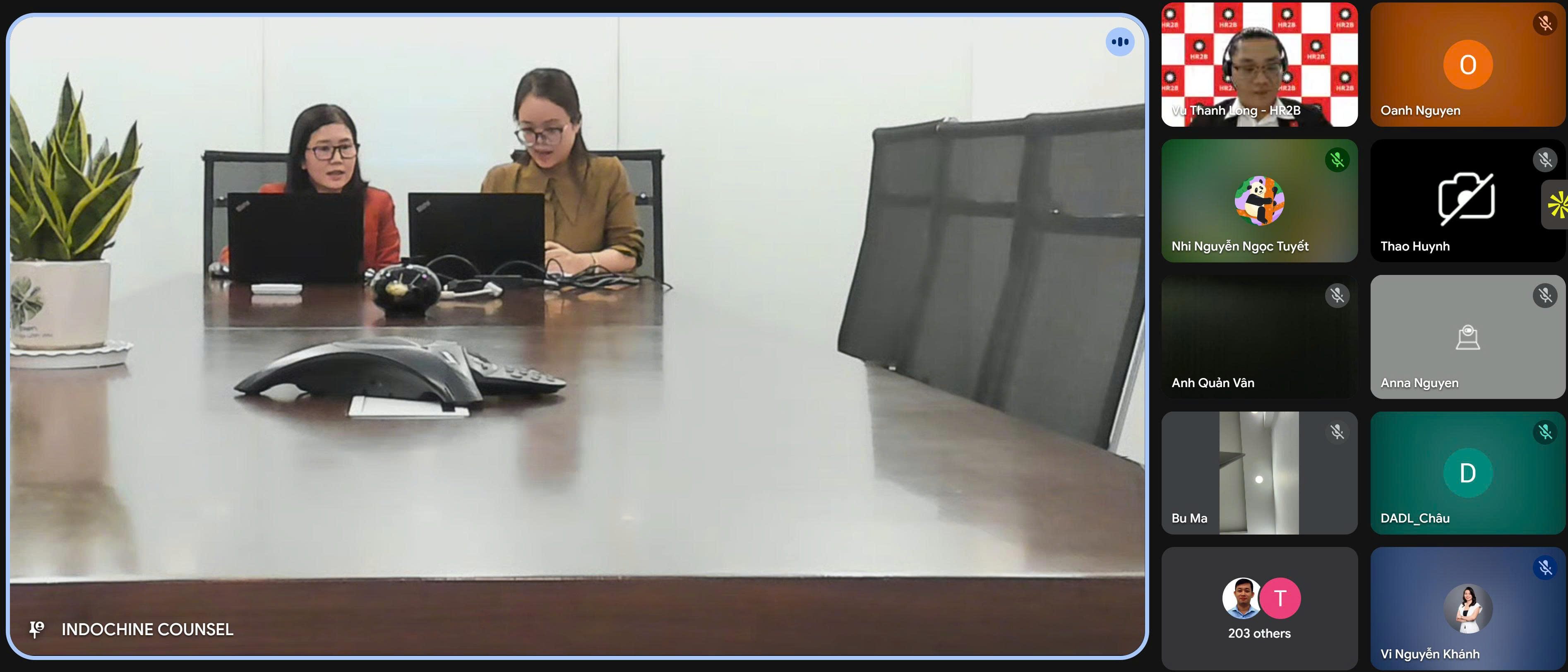
On 23 April 2026, Indochine Counsel, in collaboration with HR2B, hosted a webinar on “E-Labour Contracts in HR: Implementation Process and Key Considerations.” The session brought together HR, legal, and compliance professionals to discuss the growing regulatory focus on electronic labour contracts in Vietnam and what this means in practice for businesses.
While many organizations continue to approach e-labour contracts as part of a broader digital transformation effort, the discussion highlighted a more fundamental shift. Electronic contracts are no longer simply a matter of operational efficiency or convenience. They now sit firmly within the domain of legal enforceability and compliance risk, particularly as Vietnam strengthens its regulatory framework in this area.
The legal basis for e-labour contracts is established under the Labour Code 2019, the Law on Electronic Transactions 2023, and most notably Decree No. 337/2025/ND-CP. These regulations recognize the validity of electronic contracts, but only where strict conditions are satisfied in relation to identity verification, system integrity, and the traceability of contract data. In practice, this means that the question for businesses is no longer whether electronic contracts can be used, but whether they can withstand scrutiny in the context of an inspection, audit, or dispute.
A recurring issue observed across businesses is the assumption that a digitally signed contract is automatically enforceable. In reality, legal validity depends on the entire process surrounding the contract, including how parties are authenticated, how the contract is processed within the system, and how data is recorded and stored. Where these elements do not meet regulatory standards, the enforceability of the contract may be challenged.
Another common misconception relates to the role of technology providers. While many organizations rely on e-contract platforms, the use of such systems does not transfer legal responsibility. If the platform or implementation does not comply with applicable legal requirements, the liability remains with the employer. This can expose businesses to administrative penalties, as well as practical difficulties in enforcing contractual rights in disputes.
In addition, risk is often concentrated not at the point of contract execution, but in what follows. Amendments, suspension, and termination of employment relationships must be handled through processes that are consistent with the electronic framework. Where these steps are carried out incorrectly or outside the required system, there is a real possibility that the changes will not be legally recognized.
The discussion also emphasized the increasing importance of data management. Contract integrity, audit trails, and the ability to trace and retrieve contract history are becoming key points of focus for regulators. This effectively expands the scope of e-contract compliance into data governance, requiring coordination between legal, HR, and technology functions within the organization.

From an implementation perspective, a phased approach was recommended. Businesses should begin with a legal review of existing contract templates and internal processes, alongside the standardization of employee data and preparation for data protection requirements. This should be followed by careful system design, including vendor selection, workflow configuration, and internal authorization structures. Only after these elements are in place should organizations move to pilot deployment and gradual roll-out across the workforce. Such an approach allows potential compliance gaps to be identified and addressed early, before they evolve into broader operational or legal risks.
For HR and compliance teams, a more immediate consideration is whether their current or planned systems meet these requirements. In many cases, gaps only become apparent when examining how identities are verified, how contracts are linked and tracked within the system, how lifecycle events are processed, and whether contract data can be reliably accessed and audited. Where there is uncertainty in any of these areas, there is a heightened risk that the system may not meet legal standards.
As Vietnam moves closer to stricter enforcement in this area, e-labour contracts should be viewed not as a standalone HR initiative, but as part of a broader legal and compliance framework. Their effectiveness ultimately depends on whether they are structured, implemented, and maintained in a way that ensures enforceability in practice.
How We Can Help
Indochine Counsel advises businesses across industries on:
- Legal validation of e-labour contract frameworks
- Compliance gap assessments under Vietnamese law
- Structuring contract lifecycle processes
- Supporting implementation alongside HR and technology teams
For further guidance on implementing or reviewing your e-labour contract system, contact our team via info@indochinecounsel.com. Find out more about our Labour & Employment practice here.